Can Authors Succeed With Social Media?


How To Use The Right Words To Market Your Book

Marketing Poetry and How to Find More Readers
It was National Poet’s Day this week and in honor of that special literary holiday I thought it was appropriate to give poets some love, and talk about specific strategies for marketing poetry and improving your book discovery.
Because I think a lot of poets will concur with Graves when he said:
“To be a poet is a condition, not a profession.” — Robert Graves, in response to a questionnaire in Horizon, 1946.
And to put it mildly, it’s hard to make money at something that isn’t considered a profession.
That being said, authors around the world write in all sorts of genres without making tons of money right away, but what they do get in return, if they’re doing it right, is a dedicated fan base.
Marketing poetry the right way can get you that fan base!
But if you’ve written and published poetry, you already know how difficult marketing poetry books can be.
So here’s some advice on taking things to the next level:
read more https://www.amarketingexpert.com/marketing-poetry-and-how-to-find-more-readers/
3 Writing Tips That Helped Kelly Grow Her Readership by 500%
The post 257: 3 Writing Tips That Helped Kelly Grow Her Readership by 500% appeared first on ProBlogger.
How One Blogger Grew Her Readership by 500% with Help from Three Practical Writing Tips
In this episode we continue our Blogging Breakthroughs series, this time with a story from my friend Kelly Exeter.
Kelly is a regular speaker at our events, has contributed ProBlogger content as a guest writer, and has been a guest on this podcast several times.

Today, the story Kelly shares is a great companion piece to the “How to Become a Prolific Content Creator” episode.
Her blogging breakthrough is about going from someone who is a good and proficient but bland writer with a plateauing audience to someone who writes with more personality and in a way that’s magnetic to readers. A lot of readers.

Building a Twenty-First Century Author’s Platform

The more people who know you, the more publishers will want to get acquainted. That’s an over-simplified explanation of a writer’s platform, but it’s functionally true. Although publishers will always care more about the quality of your fiction, having a platform definitely helps seal the deal. Both the publishing industry and your target audience have changed a lot in the past few decades, however, and platform-building has changed with them.
Top Tips for a Clean and Healthy Blog Email List
The post Top Tips for a Clean and Healthy Blog Email List appeared first on ProBlogger.

At ProBlogger, we talk a lot about the value and importance of using an email strategy to drive traffic to, and make money from, your blog. But if you don’t keep your email subscriber list clean, it can negatively affect your blogging business.
By a clean list, I mean making sure your subscriber database is legal, accurate and engaged. Otherwise you may find yourself:
- fined for breaking international laws
- blacklisted by email service providers
- suffering from poor sender reputation and struggling with low open rates
- paying for inactive or non-existent subscribers
- passing up golden opportunities to connect with and market to your readers.
Here are some fundamental tips for maintaining a clean and valuable email list.
How Long Should Your Blog Post Be?
The post How Long Should Your Blog Post Be? appeared first on ProBlogger.

Today’s post is by ProBlogger writing expert Ali Luke
When I started blogging in 2008, there was a (roughly) agreed-on standard for blog posts: you should post around 500 words every weekday.
Now that I look back on that, it seems pretty silly. Some topics can be adequately covered in 300 words, while others might need 5,000. And some bloggers have a naturally terse writing style, whereas others like to dig deep and give lots of examples.
Around the end of 2013, long-form content became much more popular in the blogging world. (Here’s Darren’s post about ProBlogger’s own experiments with writing longer posts.) Then, as now, it seemed clear that Google had a preference for in-depth content.
But during the past few years, short pieces of content have become increasingly popular as well. Twitter, for instance, is often described as a “microblogging” platform. While plenty of people use it for general conversations or promotional tweets, others do use it in a blog-style way. Take a look at James Breakwell (@XplodingUnicorn)’s brilliant tweets about family life, for instance.
Lots of blogs also carry relatively short posts. Gizmodo is a good example, with very frequent news / time-sensitive posts. For instance, eBay is Knocking 15% Off Everything Just for Today was 168 words.
So should you write short posts, long posts, or something in between?
The answer is, as you might have guessed, it depends. You need to find a post length that suits your content, your readers, and (perhaps most importantly) you as a blogger.
But before we dig into those considerations, let’s take a quick look at length vs frequency.
7 Ways to Start Building an Audience for Your New Blog
The post 7 Ways to Start Building an Audience for Your New Blog appeared first on ProBlogger.

It’s a problem every new blogger faces, and it can seem insurmountable.
How do you build an audience when no-one knows who you are?
There’s plenty of good advice out there (so much that it might seem a bit overwhelming). So in today’s post I’m sharing seven straightforward but effective ways to start building an audience for your new blog.
How to Write Attention-Grabbing Promo Copy for Books [Book Marketing 101]
 The publishing marketplace is flooded with thousands of new titles every single day, and readers are inundated with offers, messages, pictures, and pleas to buy. But startling copy can make someone stop and pay attention to your book.
Since self-publishing my first book Lip Service in 1999, traditionally publishing 18 books, hybrid-publishing 3 more, starting AuthorBuzz (the first ad agency for authors), and co-creating 1001 Dark Nights (a romance novella marketing initiative), I have seen the landscape go from manageable to crowded to very crowded to where we are now — absolutely insane.
Despite the flooded marketplace, AuthorBuzz has successfully helped launch authors’ careers, ratcheted their sales up to the next level, or maintained their sales momentum while everyone else in their genre was slipping.
How have we done it?
First, we recognize no two books are the same. No two authors are the same. And to stand out in such a competitive marketplace, you have to hook readers with compelling promotional copy that makes a book feel unique. In this post, I’ll walk you through how we develop killer copy for our clients’ book descriptions, advertising campaigns, social media posts, and author websites that helps them outswim their competition.
read more: https://insights.bookbub.com/write-attention-grabbing-promo-copy-books/
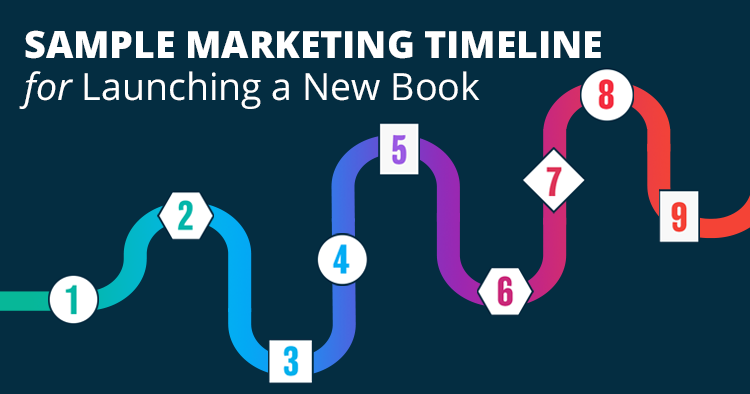
Sample Marketing Timeline for Launching a New Book
 When preparing to launch a new book, there are tons of new release marketing strategies you could choose from… but even some of the most tried-and-true promotional tactics aren’t necessarily the best for driving sales. For instance, many authors and publishers still invest time and money in blog tours, but only 5% of readers discover new books to buy via blogs.
Fortunately, BookBub has a full suite of marketing tools you can use to reach millions of members actively looking for new books to buy — and we’ve helped thousands of authors and publishers drive revenue and exposure for their new releases. 94% of our members use BookBub to find new books, and 75% have bought a new book within its preorder period or the first month after launch. And even though they love finding deals on BookBub, 74% of them also buy full-priced books.
Whether you’re looking to ramp up preorder sales, build buzz during launch week, or increase revenue after launch, we can help you accomplish your goals. To provide some guidance on where to start, we’ve created this infographic showing an example timeline for promoting a new release using BookBub’s marketing tools.
read more https://insights.bookbub.com/sample-marketing-timeline-launching-new-book/
 How To Ebook